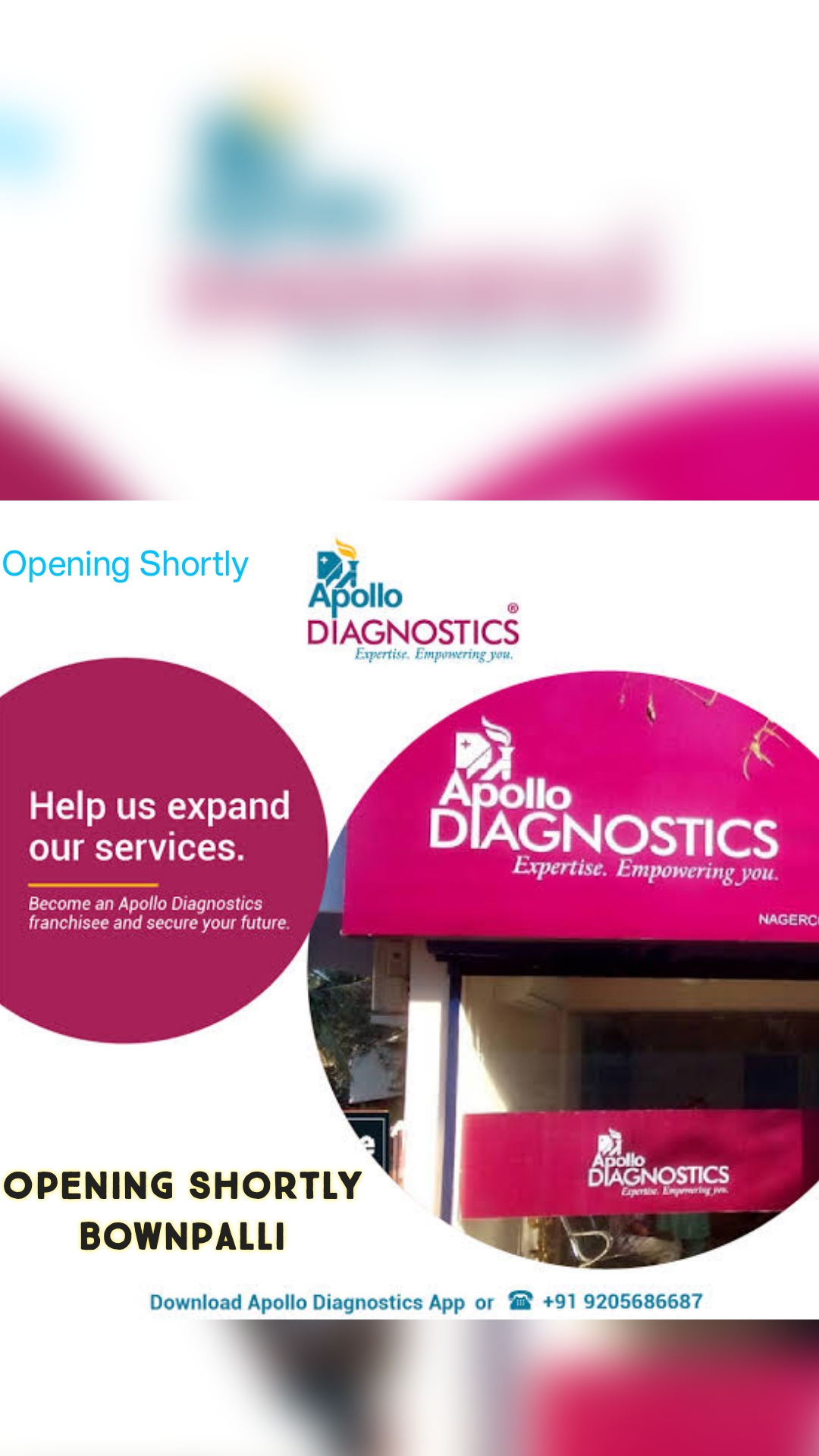
Apollo Diagnostics

Apollo Clinics are multi-specialty clinics run by Apollo Health & Lifestyle Limited (AHLL), a subsidiary of Apollo Hospitals Enterprise Limited (AHEL). AHLL is one of the largest players in the retail healthcare segment in India.

Apollo Clinics was founded in 2002 with the aim “to bring healthcare of international standards within the reach of every individual.” To achieve this, Apollo Clinics run a large network of Apollo Clinics with over 102 clinics, both owned and franchised in India and overseas.

Each Apollo Clinic is committed to not only providing consistently superior quality health care services but also addressing the day-to-day health care needs of the family. To maximize convenience and comfort, Apollo Clinic is an integrated model and offers facilities for Specialist Consultation, Diagnostics, Preventive Health Checks and Pharmacy, all under one roof.

Apollo Diagnostics

Multifunctional Robotics and Navigation: ExcelsiusGPS® Spine Surgery Robot is designed to enhance the accuracy and optimise patient care by using both robotics and navigation.
Imaging Versatility: ExcelsiusGPS® Spine Surgery Robot is a comprehensive robotic navigation platform which is compatible with any imaging system for spine surgery. With the cutting-edge robotic navigation system, the surgeon can visualize, plan and navigate patient anatomy in real-time.
Unique Real-Time Information: ExcelsiusGPS® Spine Surgery Robot is designed to continually evolve and improve patient care. During the procedure, the surgeon can verify operative planning and receive real-time navigation feedback which further provides more precise successful pedicle screw placement.

Apollo Diagnostics

COVID Spoke protein Procedure

The outbreak of the COVID-19 pandemic, caused by Severe Acute Respiratory Syndrome of Coronavirus 2 (SARS-CoV-2), has fueled the search for diagnostic tests aiming at the control and reduction of the viral transmission. The main technique used for diagnosing the Coronavirus disease (COVID-19) is the reverse transcription-polymerase chain reaction (RT-PCR) technique. However, considering the high number of cases and the underlying limitations of the RT-PCR technique, especially with regard to accessibility and cost of the test, one does not need to overemphasize the need to develop new and less expensive testing techniques that can aid the early diagnosis of the disease. With that in mind, we developed an ultrasensitive magneto-assay using magnetic beads and gold nanoparticles conjugated to human angiotensin-converting enzyme 2 (ACE2) peptide (Gln24-Gln42) for the capturing and detection of SARS-CoV-2 Spike protein in human saliva. The technique applied involved the use of a disposable electrochemical device containing eight screen-printed carbon electrodes which allow the simultaneous analysis of eight samples. The magneto-assay exhibited an ultralow limit of detection of 0.35 ag mL−1 for the detection of SARS-CoV-2 Spike protein in saliva. The magneto-assay was tested in saliva samples from healthy and SARS-CoV-2-infected individuals. In terms of efficiency, the proposed technique – which presented a sensitivity of 100.0% and specificity of 93.7% for SARS-CoV-2 Spike protein-exhibited great similarity with the RT-PCR technique. The results obtained point to the application potential of this simple, low-cost magneto-assay for saliva-based point-of-care COVID-19 diagnosis

Apollo Diagnostics

NIPT Procedure

The NIPT is very sensitive. It picks up more than 99% of cases of Down syndrome. But it is a screening test rather than a diagnostic test.

It can tell you whether there is an increased chance of having a baby with a genetic condition. It doesn’t give you a definitive answer. For some parents, information from screening tests can help them decide about whether to have diagnostic testing.

You might choose to have an NIPT test if:

Your first trimester combined screening test shows you have an increased chance of having a baby with Down syndrome (this test combines results from a blood test at 10 to 12 weeks and an ultrasound at 11 to 13 weeks).
You did not have the first trimester combined screening test because it was too late or the test wasn’t available in your area.
You want to understand your chance of having a baby with Down syndrome before considering diagnostic tests such as amniocentesis or CVS.
You have an increased chance of having a baby with Down syndrome because you are older or you or your partner already have a baby with Down syndrome or another genetic condition.
It’s a good idea to consider genetic counselling before you have an NIPT to help you make an informed decision. It’s important to understand the risks and benefits of having the test.

Genetic counsellors can:

review your family and medical history
give you information about genetic tests
help you learn about how the condition is inherited
offer advice on support services
If your pregnancy is affected by a genetic condition, your genetic counsellor can:

help support you
help you understand what the results mean for you and your family